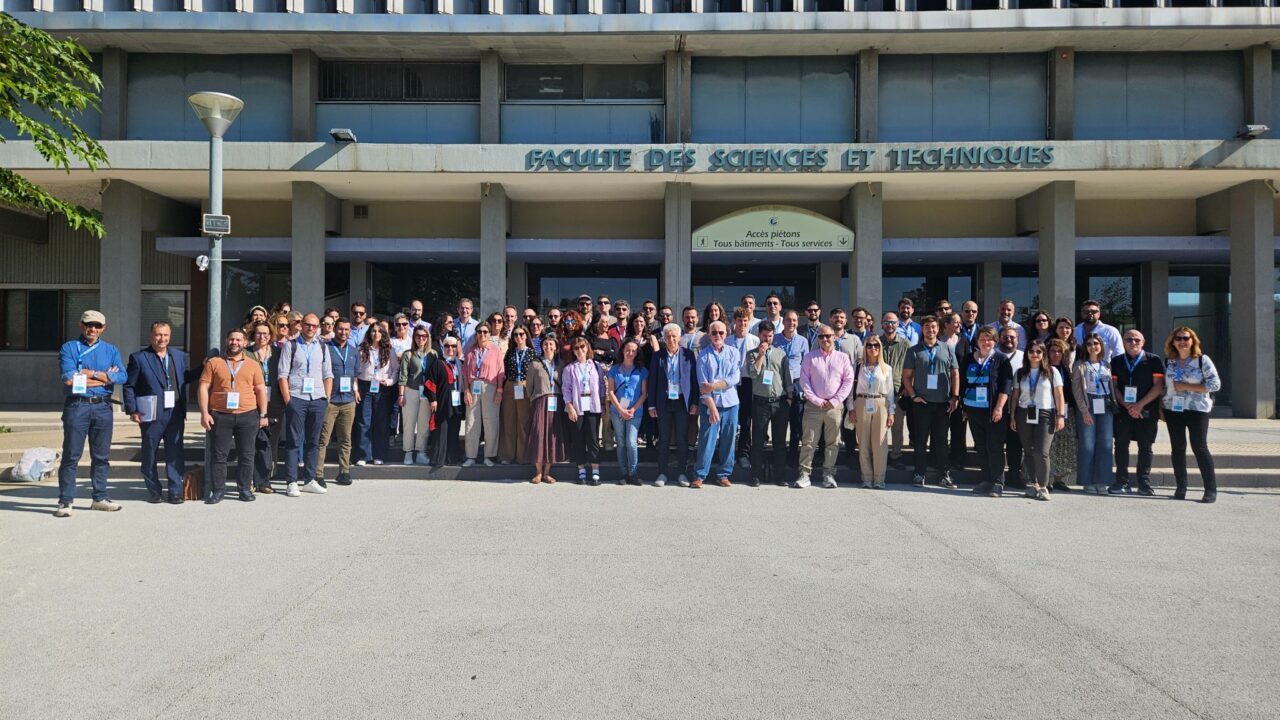
At the 7th Consortium Meeting of the European CARDIMED project, held from October 14 to 16, 2026, in Marseille, at the Hôtel de Région of the Provence-Alpes-Côte d’Azur Region, the Region of South Aegean participated.
During the three-day meeting, project partners from across the Mediterranean assessed the progress of the pilot applications (DEMOs), digital tools, and water–energy–food–ecosystems, discussed the transfer and replication of solutions in new regions, and conducted field visits to the pilot projects being implemented in Marseille.
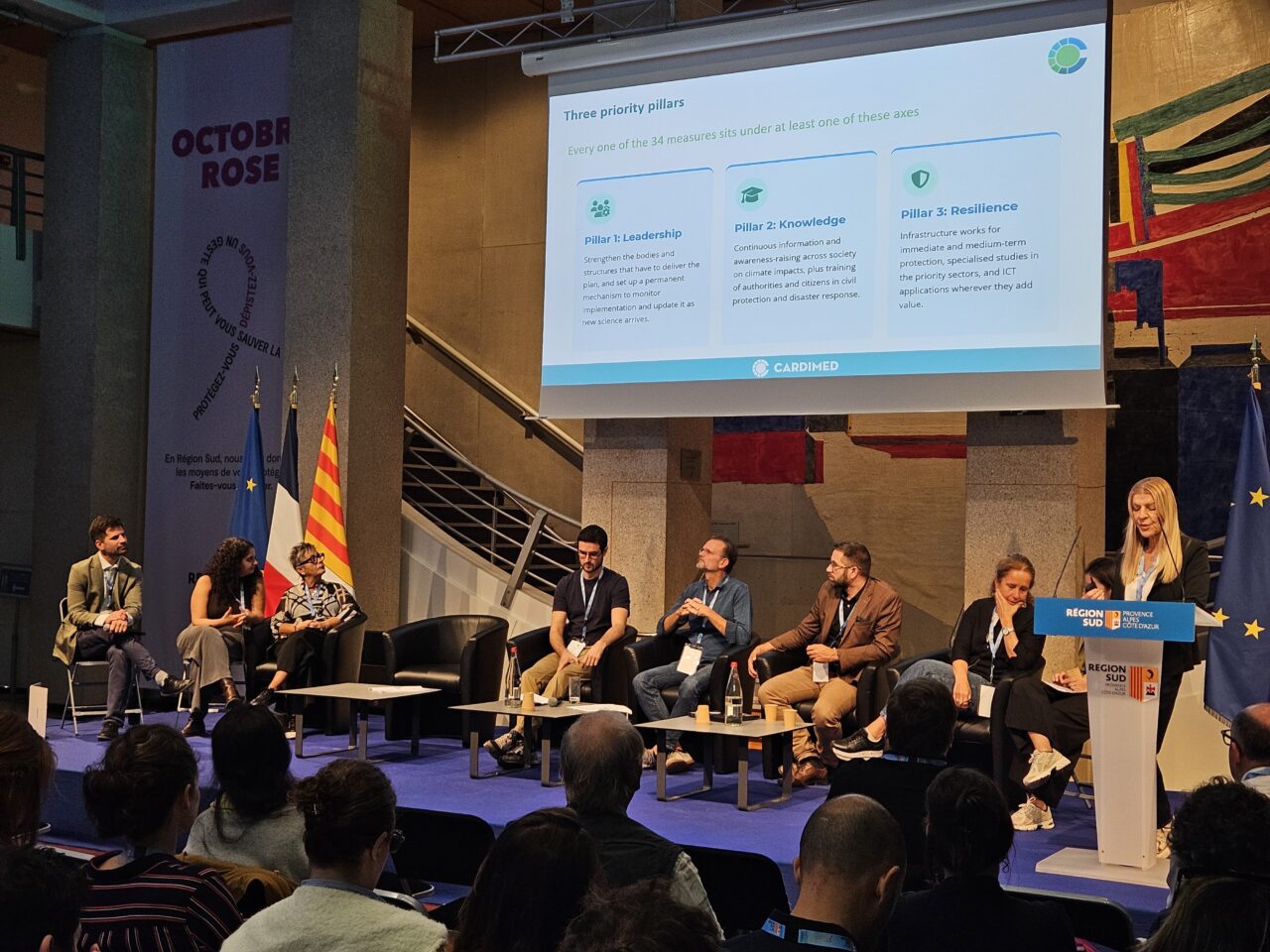
On Friday, October 16, the Region of South Aegean participated in a roundtable discussion on the topic “The Role of Public Authorities in Nature-Based Solutions (NbS),” alongside the metropolitan authorities of Nice Côte d’Azur, Aix-Marseille, and Catania (France), the Region of Alghero (Italy), and the Alentejo Region (Portugal). On behalf of the Region of South Aegean, the CARDIMED project coordinator, Vasiliki Manolakis, presented the topic “Regional Adaptation to Climate Change in an Island Region.”
Key points of the presentation:
As noted, insularity amplifies every climate-related challenge. The islands of the South Aegean have been facing water scarcity for three decades, with limited water reserves, aquifer salinization due to overpumping, and peak water demand precisely during the summer months of the tourist season. Climate scenarios predict an increase in average temperature of up to 3.6 °C and a decrease in precipitation of more than 20% by 2100, with water resources, agriculture, and biodiversity being at the highest risk.
At the same time, the Regional Adaptation Plan (PeSPKA) for the South Aegean has been completed and is moving into the implementation phase. It includes 34 costed measures with specific implementing agencies and timelines, organized into three pillars (Governance, Knowledge, Resilience), as well as the establishment of a Regional Climate Change Observatory. As Ms. Manolakis emphasized: “The analysis is complete; the critical challenge now is the capacity to implement these measures across 34 municipalities with limited technical resources.”
The CARDIMED project bridges the gap between planning and implementation. Its two pilot applications in the Region—the collection and treatment of rainwater for irrigation and aquifer recharge in Mykonos, and the reconstruction of 120 stone terraces (dry stone walls) along the streams of the Kamara basin on Sifnos — directly address the risks that the PESPKA classifies as highest priority: water scarcity, groundwater protection, and pressures on the primary sector. At the same time, the project’s digital tools and collaboration network can serve as the foundation for the Regional Observatory.
In closing, Ms. Manolakis stated that the South Aegean’s key request is for the continuation of these actions even after the CARDIMED project ends, as well as the creation of a specific pathway for replicating the solutions, tailored to small islands. The nature-based solutions developed through the two projects on Sifnos and Mykonos, along with the results achieved, could serve as examples of best practices for protecting the aquifers of the islandsand, by extension, throughout the Mediterranean region, particularly given their low cost.