
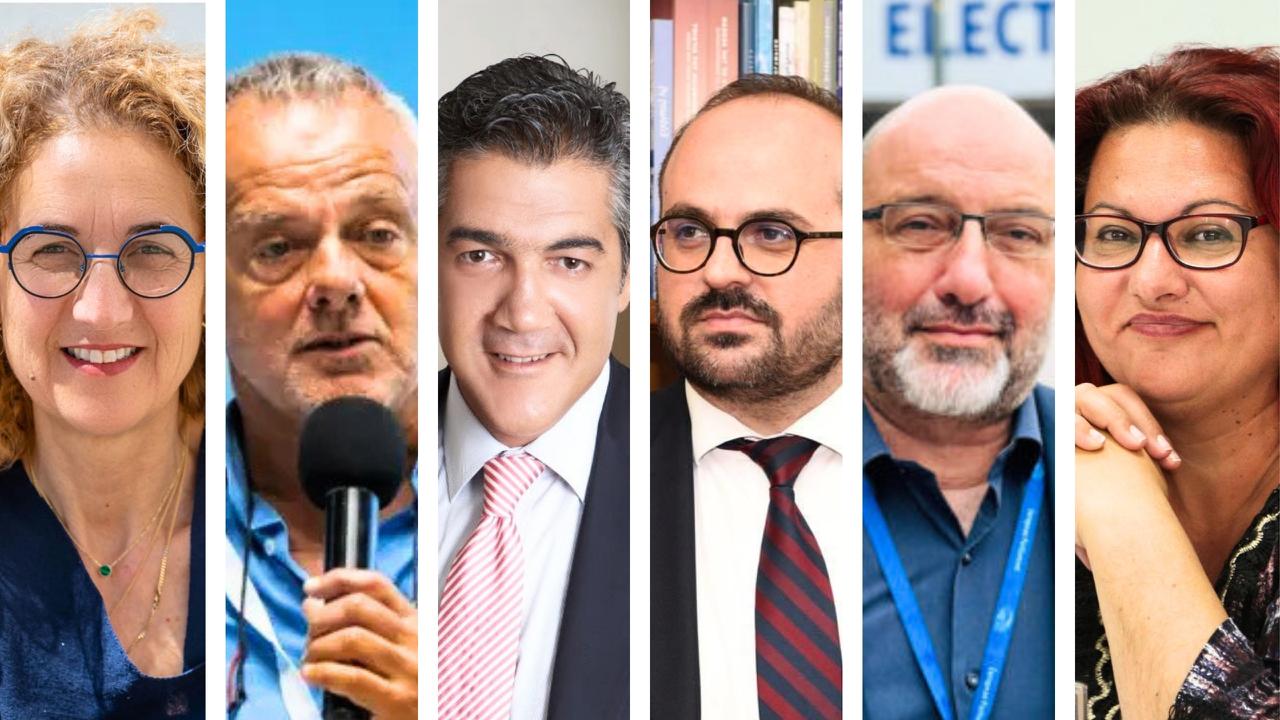
On Wednesday, July 15, 2026, an online public discussion was held with a large turnout on the topic “European Island Strategy — The Right of Young People to Remain on Our Islands”, organized by “VOICES for the ARCHIPELAGO” in collaboration with the Laboratory of Local and Island Development at the University of the Aegean. The event was attended by representatives of local government, the scientific community, institutional bodies, and citizens, as part of the broader public consultation currently underway to formulate a comprehensive strategy for the Greek islands.
A common thread running through all the contributions was that keeping young people on the islands can no longer be viewed as a mere development goal, but as a fundamental right, which must be ensured through coherent public policies, institutional measures, and adequate funding.
The discussion was moderated by the President of “VOICES for the ARCHIPELAGO,” Anastasia Psalti, who, in her opening remarks, presented the initial findings of the major public consultation currently underway across all the country’s islands. As she noted, more than 950 islanders have already submitted their proposals and joined their VOICES, creating a valuable database that will serve as the basis for the scientifically analyzed proposals of “VOICES for the ARCHIPELAGO,” emphasizing that the goal of the initiative is for the local communities themselves to help shape the solutions that island Greece needs.
The professor at the University of the Aegean and scientific director of “VOICES for the ARCHIPELAGO”, Yannis Spilanis, highlighted the importance of the very concept of the “right to remain,” noting that it shifts the focus from “market forces” to “public policies,” which create the actual conditions enabling young people to live and thrive in their hometowns. As he emphasized, policies must be designed with people and communities at the center, rather than focusing exclusively on economic growth.
The former Minister of Shipping and the Aegean and member of the European Economic and Social Committee (EESC), Kostis Mousouroulis noted that the Greek islands could serve as the first testing ground for the “right of residence,” emphasizing that the new European strategy now recognizes the islands not only as regions with “geographical particularities,” but also as “strategic territories for competitiveness, energy security, and European sovereignty.”
For his part, the Secretary General for Shipping and Ports, Manolis Koutoulakis, described the dialogue on insularity as being of national importance, noting that the European Commission’s recent initiative “provides political visibility, territorial recognition, and finally adds a European dimension” to a critical issue. At the same time, he highlighted the negotiation of the new European financial framework as the next critical step, in order to secure the necessary funding, as well as the need for broad participation by civil society and institutions in shaping Greece’s positions.
MEP Sakis Arnaoutoglou emphasized that the European strategy on insularity “must be directly linked to the European Union’s new multiannual financial framework after 2027,” stressing the need for Greece to enter the relevant negotiations with well-documented and well-thought-out proposals.
The mayor of Tilos, Maria Kamma, conveyed the message that “the solution lies not in handouts but in substantive policies” that ensure decent living conditions. As she noted, “young people are calling for affordable housing, jobs, quality healthcare, modern education, digital infrastructure, safe transportation, and equal opportunities”, emphasizing that this is “a matter of territorial cohesion and European justice.”
During the discussion, Yannis Spilanis also presented the key pillars of island policy currently being developed by “VOICES for the ARCHIPELAGO”, with an emphasis on strengthening local governance, access to healthcare, education, social care, and affordable housing, upgrading island transportation, as well as significant institutional reforms, such as elevating the General Secretariat for the Aegean and Island Policy to the level of a government ministry or a Vice President of the Government, the creation of the National Council for Island Policy and the establishment of the Research Institute for Island Policy.
Following the speakers’ introductory remarks, the floor was opened to participating citizens, representatives of organizations, and local government officials, who raised questions, concerns, and proposals, reaffirming the need to develop a national strategy for insularity through open and participatory processes.
The public consultation of “VOICES for the ARCHIPELAGO” continues, with the aim of formulating comprehensive and evidence-based proposals that will contribute to the development of a modern national and European policy for the islands, so that young people’s right to remain and build a life in their hometowns becomes a genuine political priority.
“What Kind of Development Do We Have – What Kind of Development Do We Want”
The consultation is ongoing. Add your VOICE here… https://forms.cloud.microsoft/e/vyW2UJjmuf?origin=lprLink
► You can watch the event here: https://www.facebook.com/share/v/17iY7w2sxU/