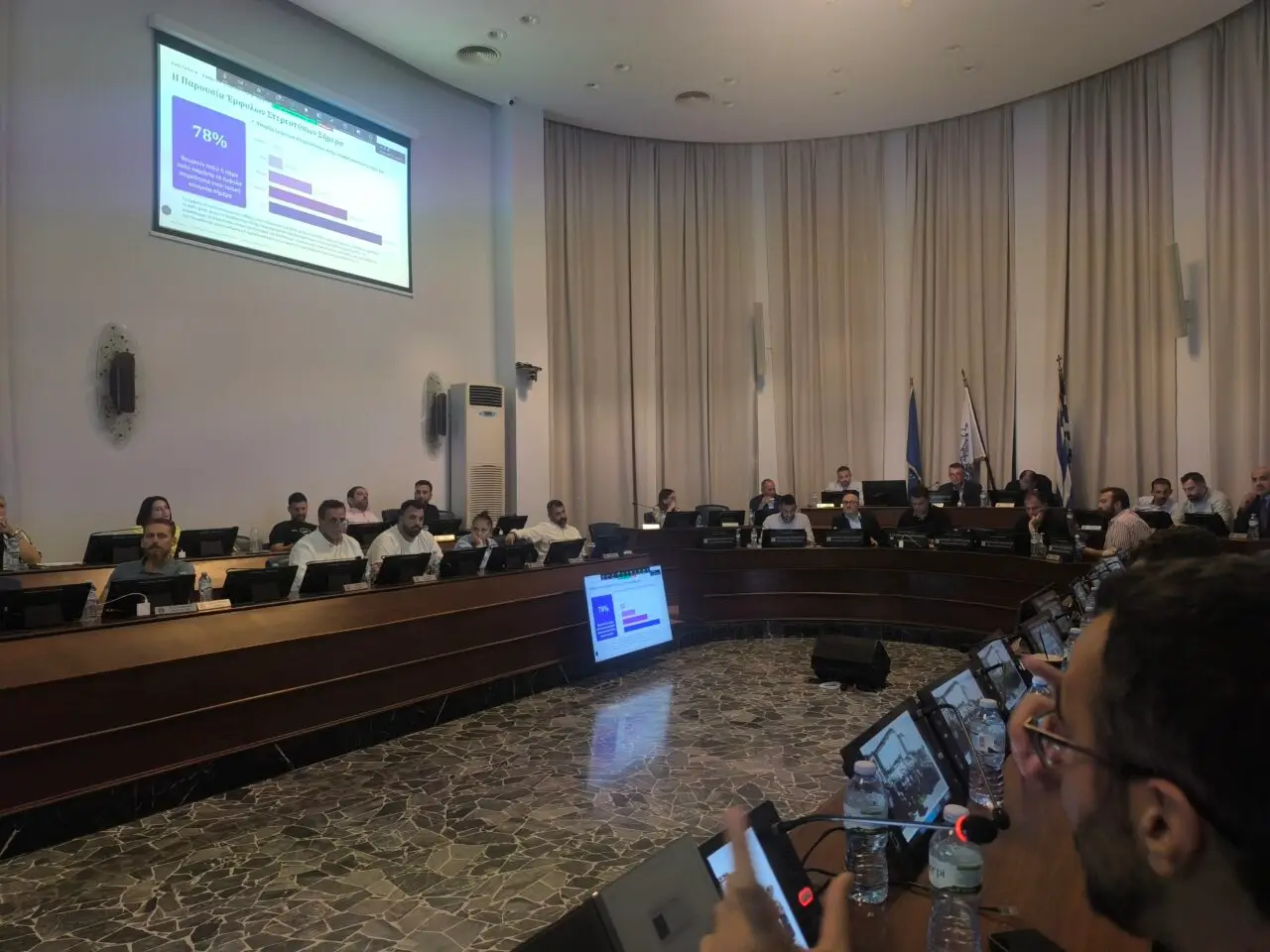
The results of the first public survey on gender equality in Rhodes were presented at the City Council meeting. The survey was conducted from July 29 to August 25 as part of the development of the Local Action Plan for Gender Equality (LGAE), making the Municipality of Rhodes one of the eight pilot municipalities in the country participating in the European Gender Flagship program (September 2024–May 2026).
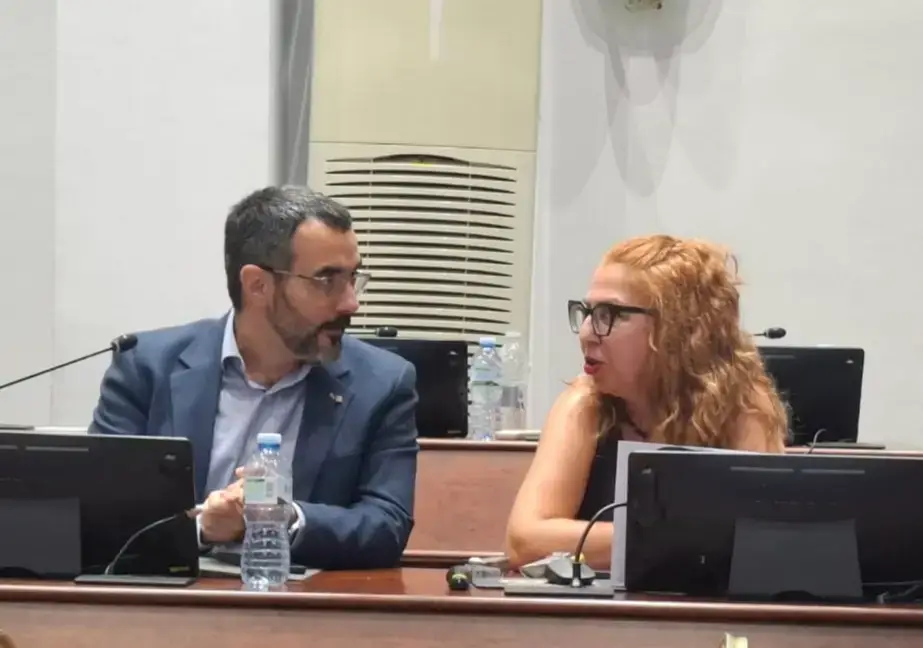
The presentation was given by the Mayor’s Special Advisor and Project Team Coordinator, Polly Hatzimarkou, and the director of research at the Rhodes Center for Historical and Social Research and assistant professor at Panteion University, Yannis Papageorgiou, while Valia Kalaitzi, an expert from Expertise France, delivered a brief online greeting.
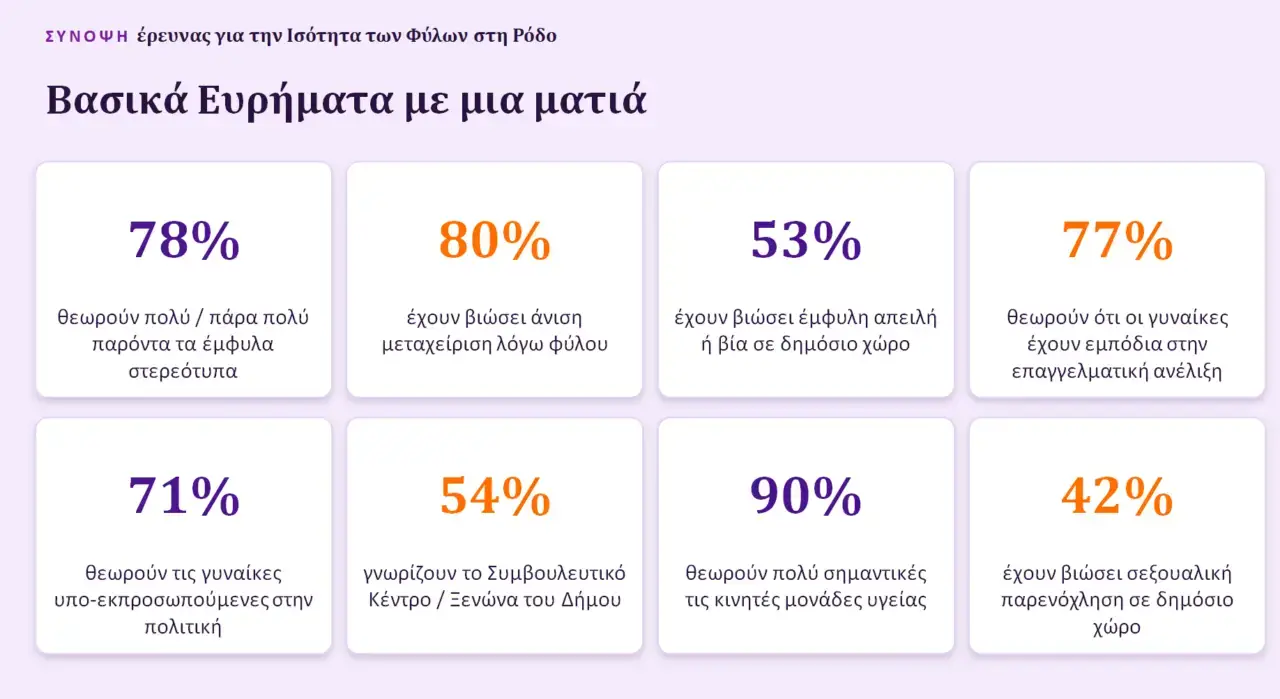
A total of 335 citizens participated in the survey, sharing their experiences and suggestions across five sections. According to the data, 78% of participants consider gender stereotypes to be very or extremely prevalent, primarily in social interactions (71%), on social media (70%), in the workplace (57%), and in the media (55%). At the same time, 80% report having experienced unequal treatment based on gender, 72.8% have faced some form of gender-based threat or violence (53% in public spaces), and 64.8% report an incident of sexual harassment.
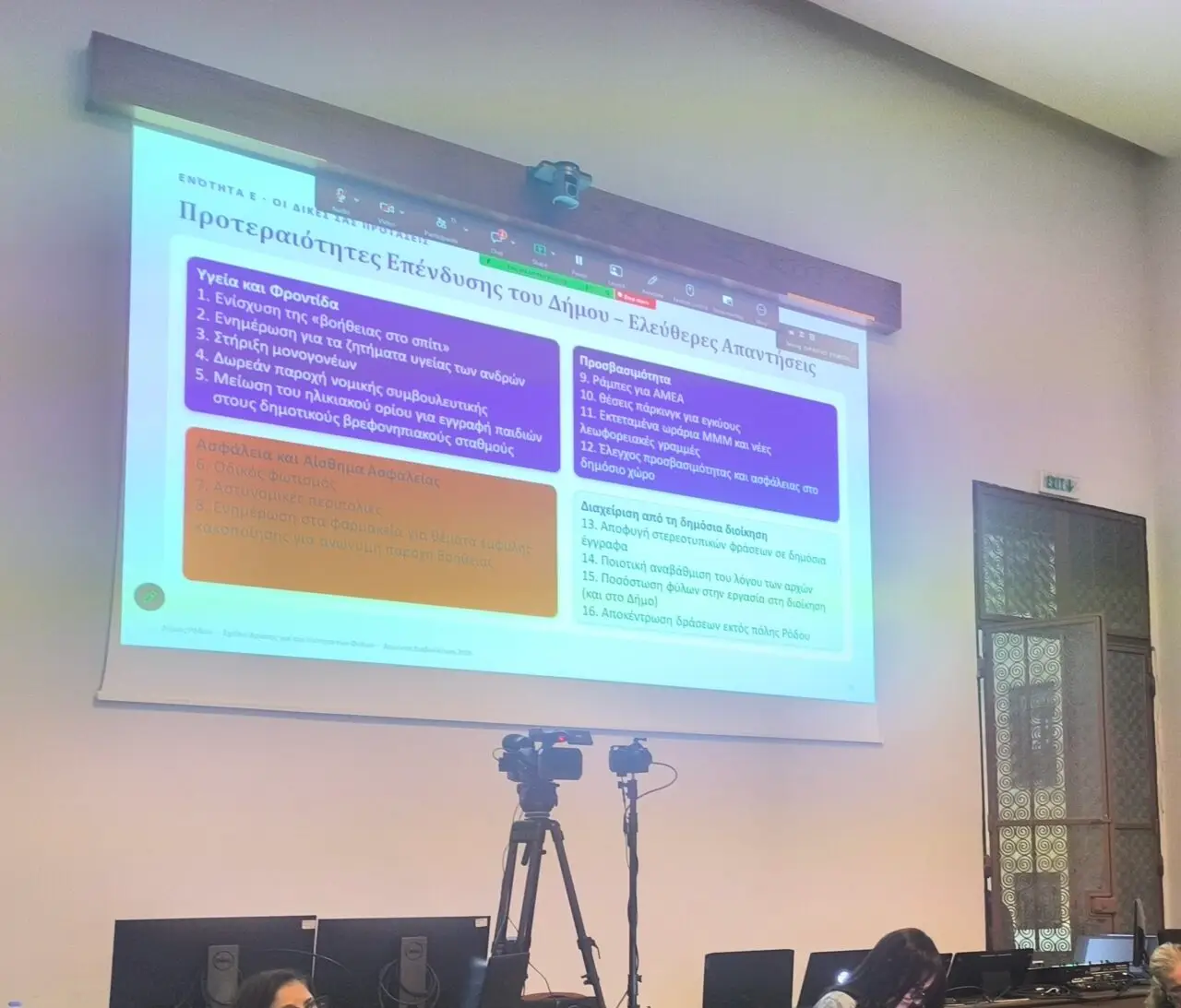
With regard to the labor market and public life, 77% identify barriers to women’s career advancement, and 71% believe that women are underrepresented in local politics. Nearly 8 in 10 people call for the expansion of infrastructure such as daycare centers, care services for the elderly and people with disabilities, and public transportation. More than 85% of citizens identified the prevention of online gender-based violence, mobile health units, strengthening mental resilience, and sex education programs. Detailed survey data is available on the Municipality of Rhodes website.
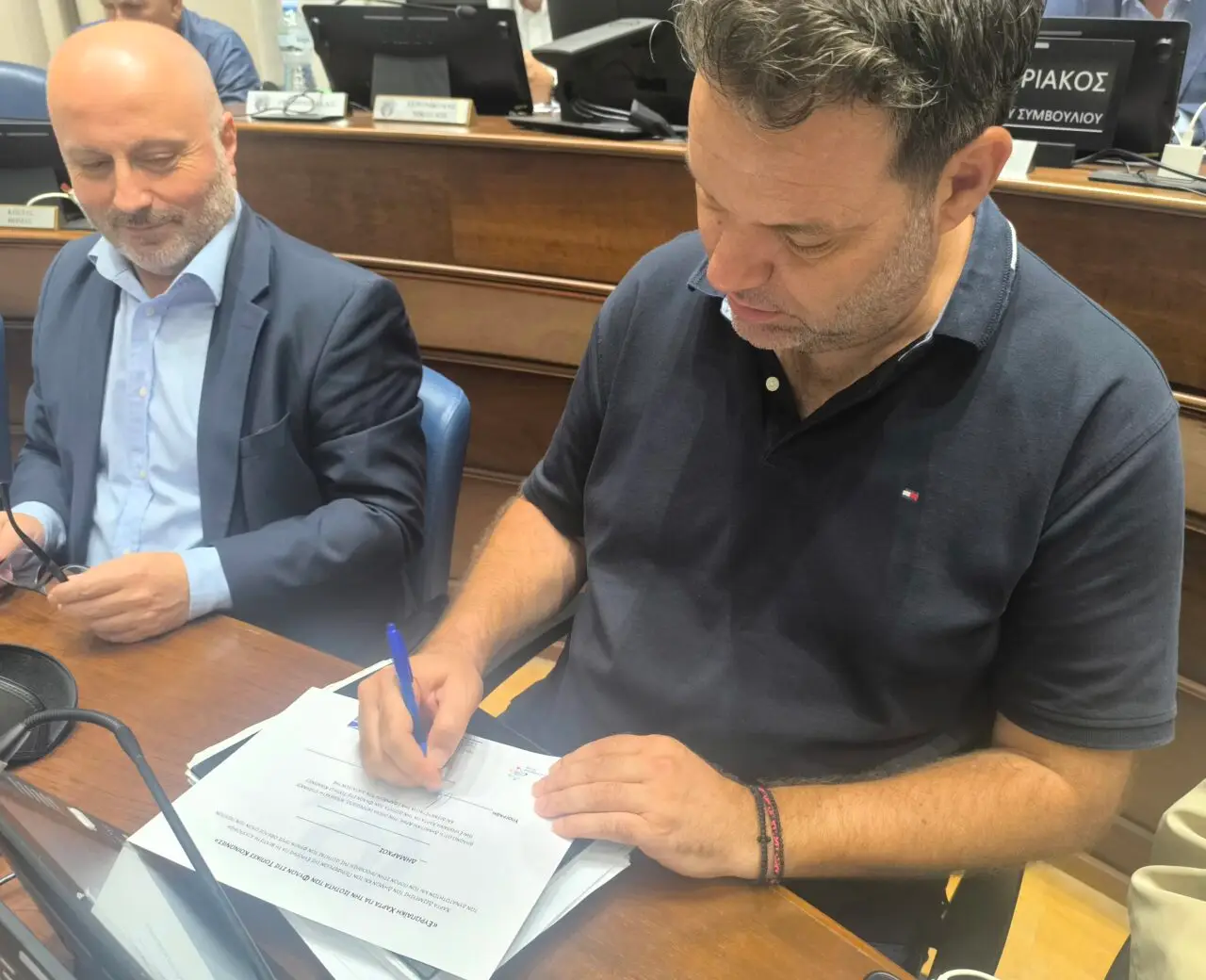
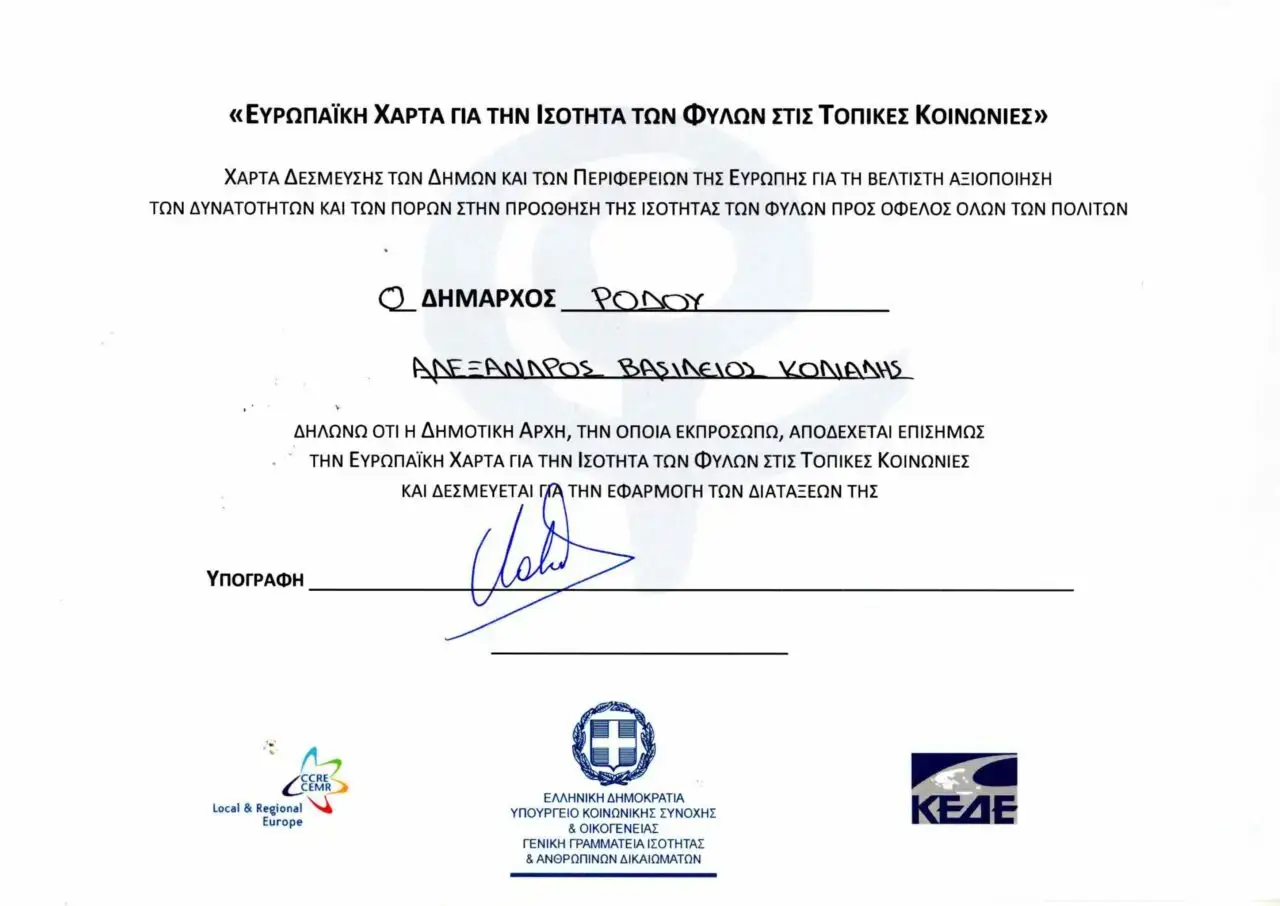
Following the presentation, the Mayor of Rhodes, Alexandros Koliadis, signed the revised European Charter for Gender Equality in Local Communities of the Council of European Municipalities and Regions (CEMR). The new version includes nine additional articles on cyberviolence, intersectionality in discrimination, digital inclusion, crisis management, and the link between equality and climate change.